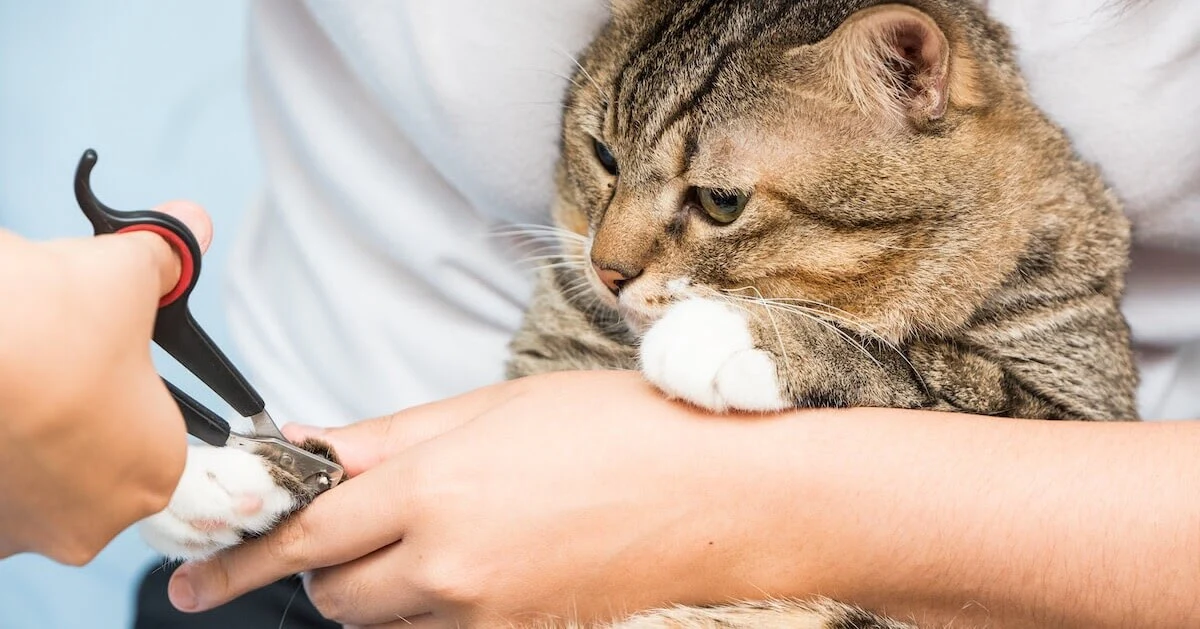
As you gaze lovingly at your cat curled up on the sofa, happily enjoying the warmth of your home, you may have wondered who, human or cat, truly initiated this cohabitation. A question as crucial as the chicken and the egg! Yet, by asking this question, we open the doors to a fascinating story that begins around granaries nearly 10,000 years ago. Discover with us this “domestication” in which the cat seems to be the primary instigator.
The origins of the encounter between cat and human
To understand who tamed whom, we must go back to the Neolithic period, to the Fertile Crescent region, around 11,000 BCE. At that time, humankind underwent a major revolution: abandoning nomadism for a settled lifestyle. People began cultivating the land to produce food and, above all, to store surplus grain for leaner times. Agriculture was born!
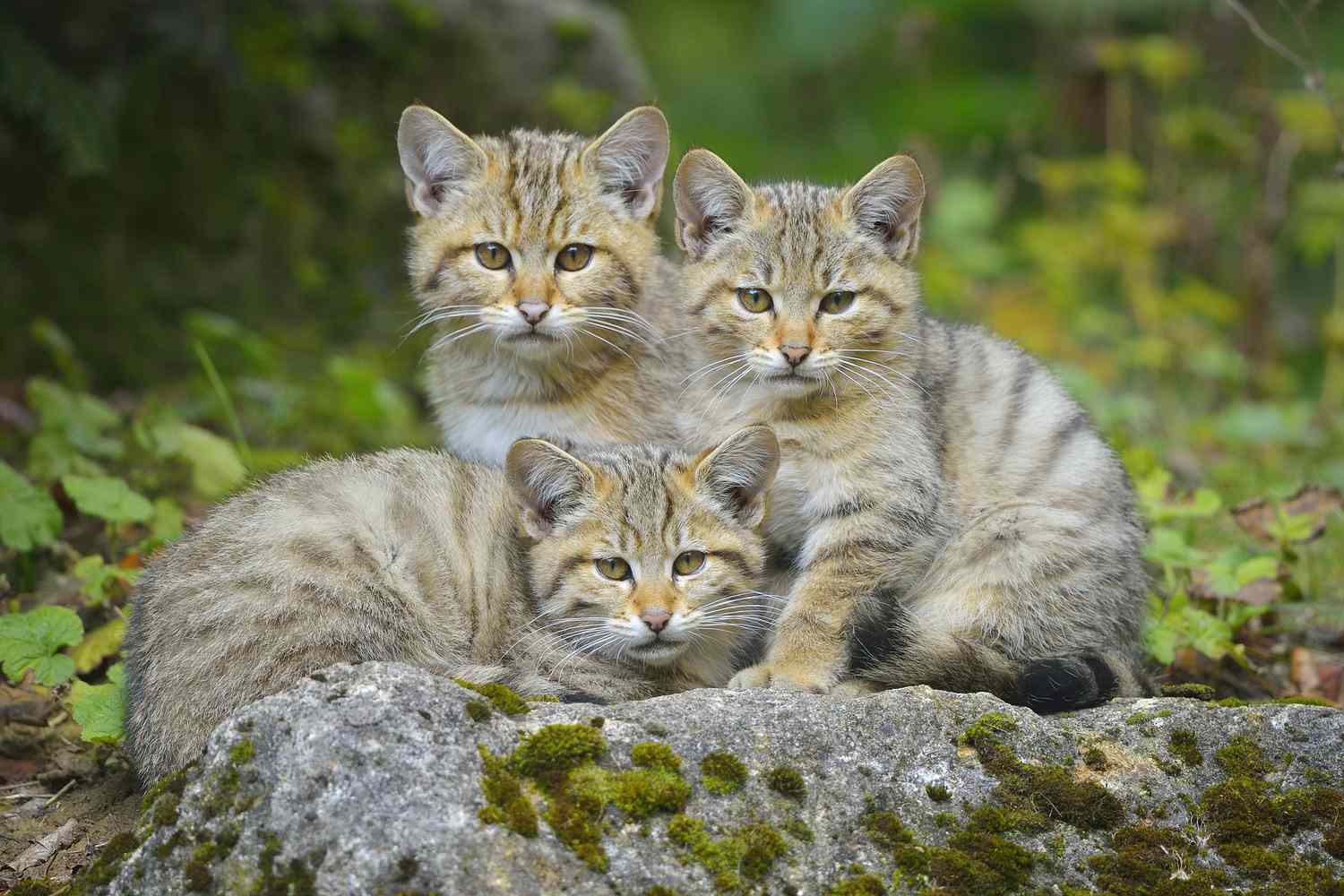
These grain stores quickly became a godsend for rodents of all kinds. Mice and rats literally swarmed around the first human settlements. This is where the ancestor of our domestic cats, the African wildcat or African wildcat ( Felis silvestris lybica ), comes into play. At least the most docile or the hungriest ones! Unlike the dog, which humans actively recruited for hunting or guarding, the cat approached humans of its own accord. And humans tolerated them in light of the services they rendered!
The cat, a born opportunist!
In reality, humans didn’t go looking for wild cats in the forest. It was the cats who decided to settle there, in the vicinity of humans. Quite simply because they saw an advantage! By settling on the outskirts of dwellings, near granaries, the feline ensured an abundance of prey without expending much hunting effort.
The wild cat certainly found another, less direct, benefit: the proximity of humans ensured relative protection against larger predators such as wolves.
This type of relationship is akin to commensalism; one individual (in this case, the cat!) benefits from another individual (the human) without harming them. The human, observing that this discreet little carnivore was cleaning out its vermin stores for free, let it continue…
The cat, a biological exception
In evolutionary biology, the cat is a true exception, especially when compared to the other domesticated animal that largely coexists with us: the dog. While the dog descended from the wolf, the genetic differences between the dog and its ancestor are considerable. For millennia, humans have selected numerous morphological characteristics to “create” the various dog breeds.
In contrast, the domestic cat has remained virtually identical to its ancestor, the African wildcat, from a genetic standpoint. It has retained its physical characteristics and, above all, its hunting instinct. It has, in a way, self-domesticated; it hasn’t conformed to human desires or needs. It has adapted to humans while maintaining its autonomy. Moreover, a cat doesn’t hunt on command but when it wants; it doesn’t respond to orders, and it can return to the wild whenever it chooses (even if you find it hard to imagine your large, sofa-loving feline fending for itself in nature!).
Egypt, the shift towards another dimension
While cats settled near humans during the Neolithic period, it was in ancient Egypt that the relationship took on a new dimension. The Egyptians not only domesticated the cat, but they also deified it. Archaeological discoveries have amply demonstrated this.
At this time, the cat became a true pet, ut it remained free, because it wasn’t subjugated to humans, like a horse, for example. It went from being a useful predator to a member of the family, even a god among the Egyptians. In fact, it was during this period that the cat finished domesticating humans. Humans accepted it no longer for what it did—hunting rodents—but for what it was: a simple cat.
So, in the end, who tamed whom first? The cat! Quite simply because it took the first step towards the human, discreetly entering their life using a few tricks…
Is the cat a manipulator?
It’s a fact that the cat is at the origin of the relationship with humans. And this was for food-related reasons. But who has perpetuated this relationship over the centuries? Certainly, he cat… because it has managed to win us over by developing strategies and behaviors, even communication tools, specifically designed to charm us.
The meow, created for man
Did you know that adult catsrarely meoww to each other in the wild? Or only during mating season, for specific reasons. They rely more on body language and scent marking. A cat’s meow, therefore, is a communication tool that domesticated cats developed exclusively for us.
Studies have even shown that your cat’s meow when it demands food contains acoustic frequencies close to those of babies!
Purring, a mutual soothing sound
With its purring, the cat has won hands down! Admit it, you don’t dare move when your cat is snuggled up against you, purring its heart out… Of course, it’s a sign of pleasure for the cat. But it’s also a “remedy” for you, soothing you, calming you, and helping you relax. And the cat knows it perfectly well!
Who truly domesticated whom?
The cat naturally emerges victorious from this story! It got what it wanted—food, well-being, protection—without paying the price. It doesn’t work, it retains its freedom and independence, and it isn’t obedient to humans…
Ultimately, aren’t we humans the ones who have been domesticated by the cat? Looking at it more closely, we’re not far off. We create a space for them with cat trees, a litter box, our sofa or our bed, we feed them high-end food, we buy them toys, we take them to the vet… and we share their territory!