Adopting a puppy means welcoming a new being into your home, with all the tenderness and enthusiasm that entails. But behind this initial euphoria lies an often underestimated necessity: dog training. Early learning isn’t about imposing rigid rules, but about creating a secure environment for both the puppy and those around it. From the very first weeks, the animal establishes its bearings, absorbs stimuli from its surroundings, and develops its first automatic behaviors. Delaying this stage risks the development of undesirable behaviors that are difficult to correct later. Through gentle, progressive, and kind methods, it becomes possible to encourage obedience without stifling the puppy’s spontaneity. This article explores the fundamentals of puppy training from the first commands to teach to the mistakes to avoid, intouild a relationship based on trust, consistency, and respect.
When should I start training a puppy?
Learning in puppies doesn’t begin when they understand commands, but as soon as they start interacting with the outside world. It is precisely this window of opportunity that must be exploited with discernment.
What is the ideal age to train a puppy?
The period from 8 to 16 weeks is considered a critical socialization phase. At this stage, the puppy is particularly receptive to new experiences. It learns to identify what is familiar, safe, or threatening. Gradually introducing the basics of training at this age helps lay the foundation for balanced behavior. This is not yet a phase of intensive training, but rather an ideal time for initiation.
Can a puppy be trained too early or too late?
Starting training too early, before 7 weeks, can be counterproductive: the puppy still needs its mother to develop certain social behaviors. Conversely, late training, after 5 or 6 months, risks ingraining undesirable behaviors. Fear of the unknown, defensive aggression, chronic disobedience: these are all risks that can be avoided by starting at the right time. Mental plasticity is a temporary advantage. It’s better to take advantage of it early than to have to undo it later.
How can the sessions be adapted to his young age?
Training sessions should be short to maintain attention: 5 to 10 minutes is sufficient. Ideally, these short sessions should be spread throughout the day rather than requiring long, exhausting exercises. Using positive reinforcement —treats, petting, and an enthusiastic tone of voice—helps to condition good behavior without stress. Every interaction thus becomes a learning opportunity, even outside of formal training times. Consistency in signals and patience in responses are the keys to successful dog training .
What are the basic commands that should be taught as a priority?
Far from being a luxury, teaching a puppy essential commands is crucial for safety and harmonious coexistence. It’s best to start with simple but structured training.
How do you teach your puppy to come when you call it?
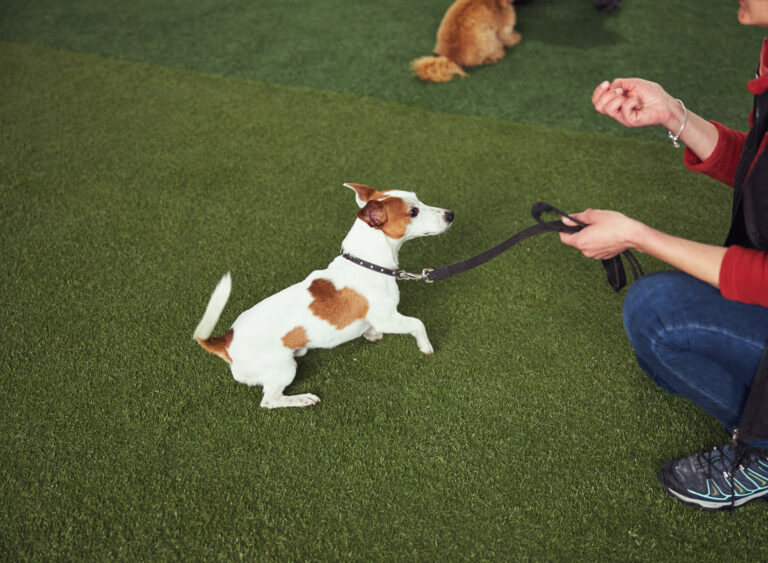
The reminder is undoubtedly the most crucial command. To ensure it is firmly established:
- Choose a quiet place, free from distractions.
- Crouch down to his level to get his attention.
- Say your name, followed by the same keyword each time.
- Reward him consistently when he obeys, even hesitantly.
It is essential to avoid any reminder followed by punishment. This could create a negative association. At this stage, trust is a more powerful tool than authority.
How can I teach him to sit still and stay calm?
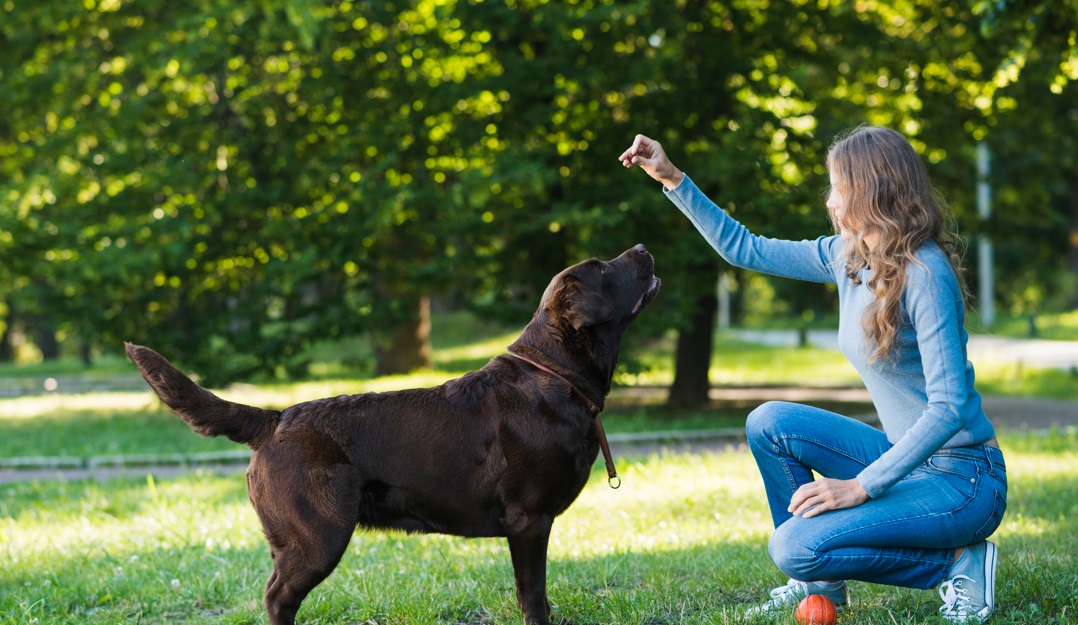
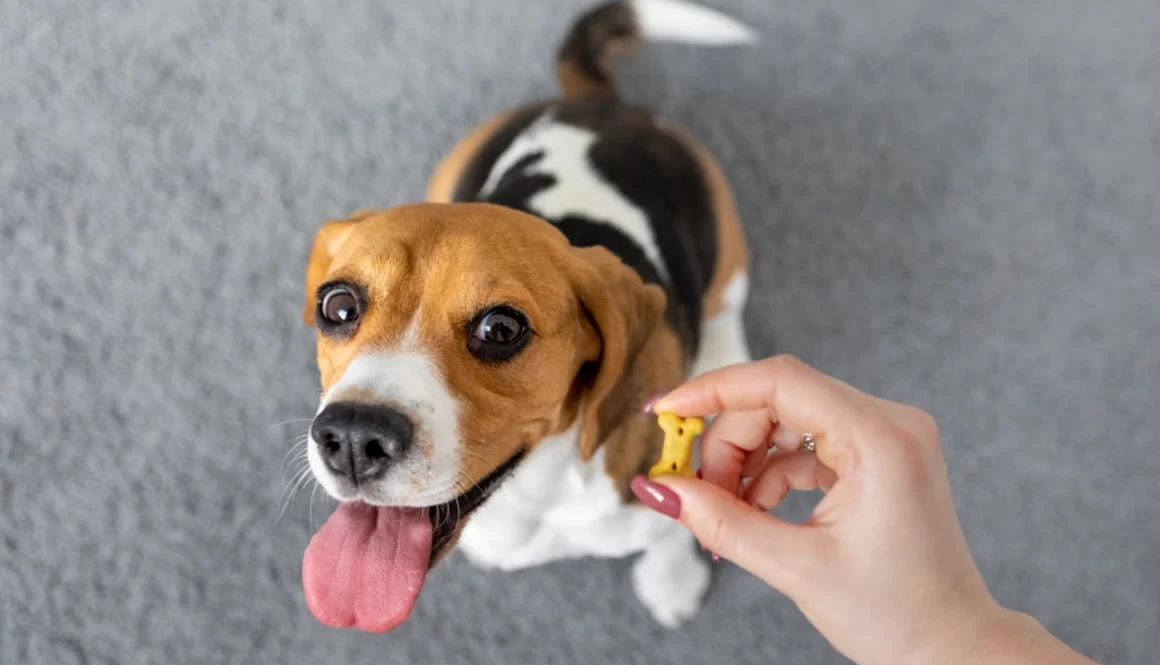
The “sit” command serves as the foundation for many other commands. It makes it easier to manage exciting situations, such as the arrival of guests. The simplest method is to guide the puppy’s head upward with a treat, which encourages a natural sitting motion. Once the puppy is sitting, it’s important to say the cue word and reward immediately.
The “stay” command takes more time. It assumes the puppy has already achieved a certain level of emotional stability. Introducing small, gradual distractions, such as a noise or movement, helps strengthen its ability to focus.
Should we teach him to be clean from the beginning?
Yes, because cleanliness isn’t acquired spontaneously. A routine of regular outings is essential from the very first days. Taking the puppy out:
- After each meal,
- After each nap,
- And about every two hours at the beginning.
Observing the warning signs (sniffing, restlessness, dizziness) allows you to anticipate problems. In case of an accident, avoid any reprimands. Cleaning up without drawing attention to yourself remains the best option. The fundamental principle: reward good behavior without punishing mistakes. House training is a marathon, not a sprint.
What training methods are best for a puppy?
Training a young dog is not based on intimidation or domination, but on clear, consistent, and motivating guidance. By using the principles of positive reinforcement training, it is possible to establish stable behaviors without breaking spontaneity or trust.
Is positive reinforcement really effective?
Far from being a permissive method, positive reinforcement is based on rigorous behavioral logic: what is rewarded is repeated. This can take several forms, to be adapted according to the puppy’s profile:
- High-value treats (flavored, easy to chew)
- Caresses at the right moment, while remaining calm
- Short games following a successful command (shooting, throwing a ball)
This strategy maintains motivation and facilitates learning without generating unnecessary stress.
How to correct bad behavior without violence?
A puppy doesn’t disobey to be defiant, but because it’s testing the waters or doesn’t yet understand. Rather than punishing, it’s better to:
- Ignore undesirable behaviors if they are not dangerous
- Redirect attention to an appropriate activity
- Maintain consistency in reactions: Every behavior must have the same consequence
The goal is to make good behavior more appealing than bad behavior.
Are necklaces or accessories necessary?
Some equipment promises quick results, but at the cost of trust. Electric hoke, or prong collars, can generate fear, aggression, or inhibition. They have no place in respectful training . It’s better to opt for a comfortable harness and a short leash to guide calmly. Equipment should serve the relationship, not constrain it.
What common mistakes ruin a puppy’s training?
Even with the best intentions, certain attitudes can undermine educational efforts. Identifying these pitfalls prevents the creation of lasting obstacles.
Why is yelling or physical punishment counterproductive?
Yelling or hitting teaches nothing. These actions only express human frustration. In puppies, they cause stress, emotional withdrawal, and even a break in the bond . Leaning becomes stuck in fear, not understanding.
Should you let your puppy do whatever it wants “because it’s small”?
Giving in to every whim under the guise of youth is tantamount to normalizing bad behavior. A puppy doesn’t distinguish between playful fun and a bad habit. Setting gentle but firm boundaries from the start is a form of protection, not harshness.
How to avoid inconsistency between family members?
A puppy subjected to contradictory rules becomes confused. To avoid this confusion:
- Establish common guidelines (prohibitions, authorized areas, etc.)
- Use the same keywords for each order
- Ensure that everyone implements educational decisions
Collective cohesion is the basis of a solid education.
Puppy training – patience and consistency for a lasting bond
Training a puppy requires discipline and kindness. By starting during the socialization period, favoring gentle methods, and avoiding harsh or inconsistent actions, it becomes possible to build a lasting bond. Every step forward is based on consistency, and every challenge can be overcome with patience. For more complex situations, the support of a professional dog trainer is invaluable. Prevention is better than a cure.
FAQ – Answers to frequently asked questions about puppy training
My puppy is chewing on everything. How should I react?
Offering a suitable toy and ignoring hand-biting allows you to redirect the behavior without punishment. Consistency prevents the behavior from becoming ingrained.
How can I get my puppy used to being alone?
Proceeding with short absences, without excessive departure or return rituals, helps to limit separation anxiety.
Should a clicker be used for training?
The clicker is a good tool if you know how to use it. It precisely marks the correct behavior, but it’s not essential.
How to socialize your puppy with other animals?
Increasing positive interactions from the first few weeks, while respecting the puppy’s signals, promotes balanced relationships.
What should I do if my puppy refuses to obey?
Review the environment (too many distractions?), lower expectations, strengthen rewards, a nd rework the basics without pressure.
Can you train a puppy without treats?
Yes, provided that other natural motivations such as games, caresses, or voice are used to reinforce the behaviors.
When to move on to more complex exercises?
When basic commands are reliably acquired in different contexts, it becomes possible to gradually raise the level.