To be happy, all dogs need mental and physical exercise throughout the day. Unfortunately, sometimes we notice that our pets seem bored. So how can we enrich their environment and ensure their well-being? That’s what we’ll explore here.
The risks are involved if the dog gets bored.
If our dogs need daily exercise, it’s for both their physical and mental well-being. All dogs need a minimum amount of exercise every day. The intensity and duration will simply depend on a few factors:
- the age of the dog (an adult animal will need more daily exercise than a puppy or an older dog);
- its breed (some are more energetic than others, like working dogs);
- his temperament;
- his state of health;
- his habits (used to being highly stimulated or not).
A dog’s boredom can have numerous consequences for its health. A dog that lacks stimulation and energy expenditure may first develop behavioral problems due to frustration :
- destructive behavior;
- uncleanliness;
- Separation anxiety ;
- hyper-attachment;
- untimely barking;
- aggressiveness;
- bulimia;
- hyperactivity ;
- difficulty concentrating;
- self-harm;
- fugue;
- etc.
He may also become apathetic, lose motivation for any activities, or even suffer from depression.
But boredom will also have an impact on the quality of his sleep, therefore on good physical recovery and the strength of his immune system.
To avoid this situation, two elements will be essential:
- Teach him from a young age how to cope with loneliness.
- To offer him an environment rich in stimulation, which will allow him to express his curiosity, discover new things, use his different senses, have interactions, a nd challenge himself.
1 – Offer the dog a variety of toys
Most dogs love to play, and luckily, there are many models available for all tastes and budgets.
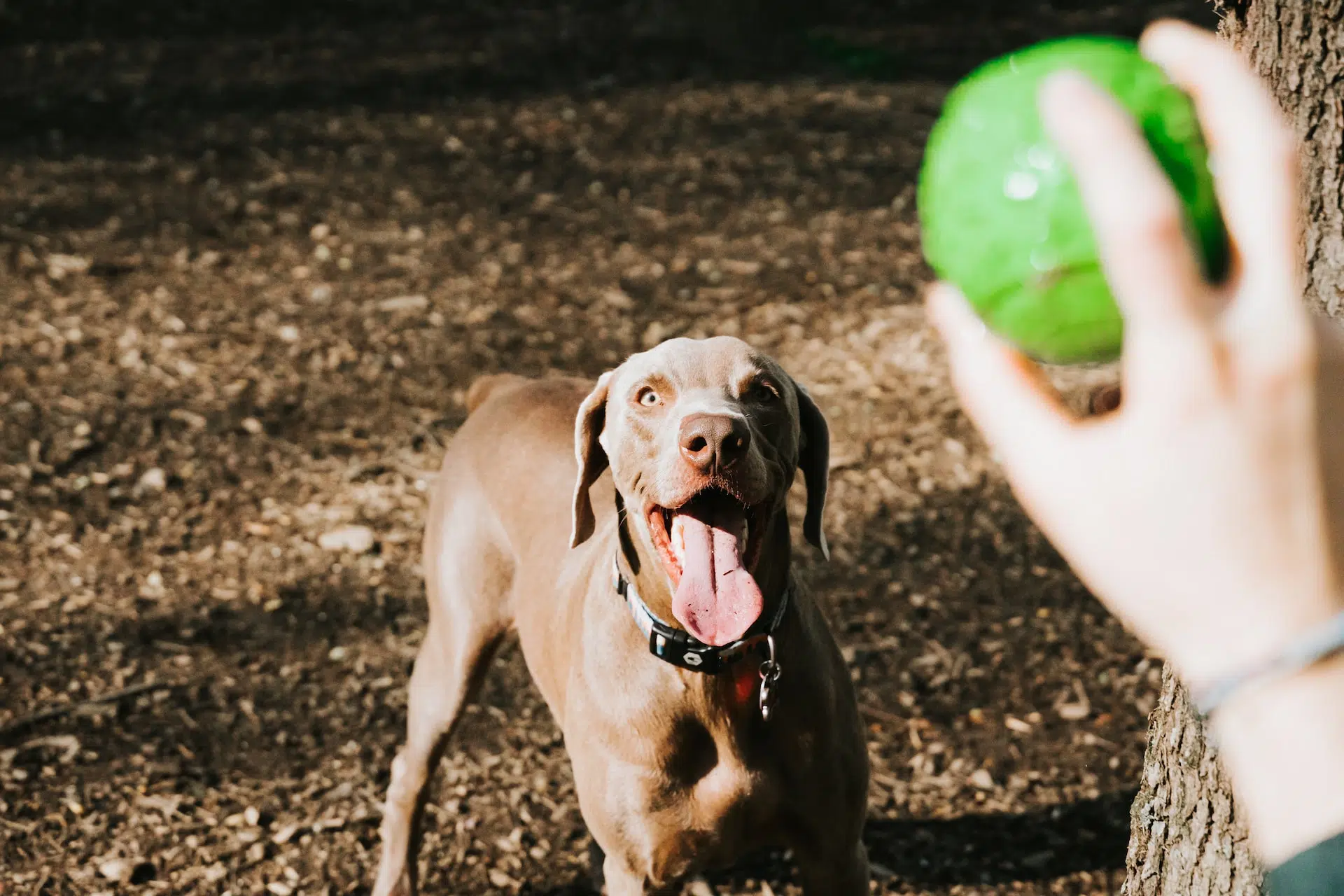
To stimulate a bored dog, start by offering it a variety of toys. The most basic ones are always very popular, such as a ball, a rubber toy, a frisbee, a knotted rope, or a plush toy (choose a fairly sturdy one).
But there are also more sophisticated types of toys, particularly those called “interactive toys”: lick mats, snuffle mats, puzzle toys, and so on. The idea is that the dog “works” a little to earn a reward (treat). These toys stimulate both the dog’s physical and mental abilities, helping to expend energy effectively and tire him out.
Don’t forget about chewing activities, which are just as important for dogs. They also help them release stress and contribute to their good oral health. For this, choose treats or toys specifically designed for chewing.
You don’t necessarily have to break the bank to give your dog interesting toys. You can find them secondhand or even make them yourself. There are many DIY tutorials online for creating dog toys from everyday items, such as an old t-shirt, a plastic bottle, or toilet paper rolls.
To prevent your dog from getting bored so quickly, you can rotate the toys. Instead of allowing him access to all the toys at once, offer him two or three for about ten days, then put them away and bring out two or three new ones. This will be a good way for him to rediscover them and be less prone to boredom.
2 – Organize regular and varied walks
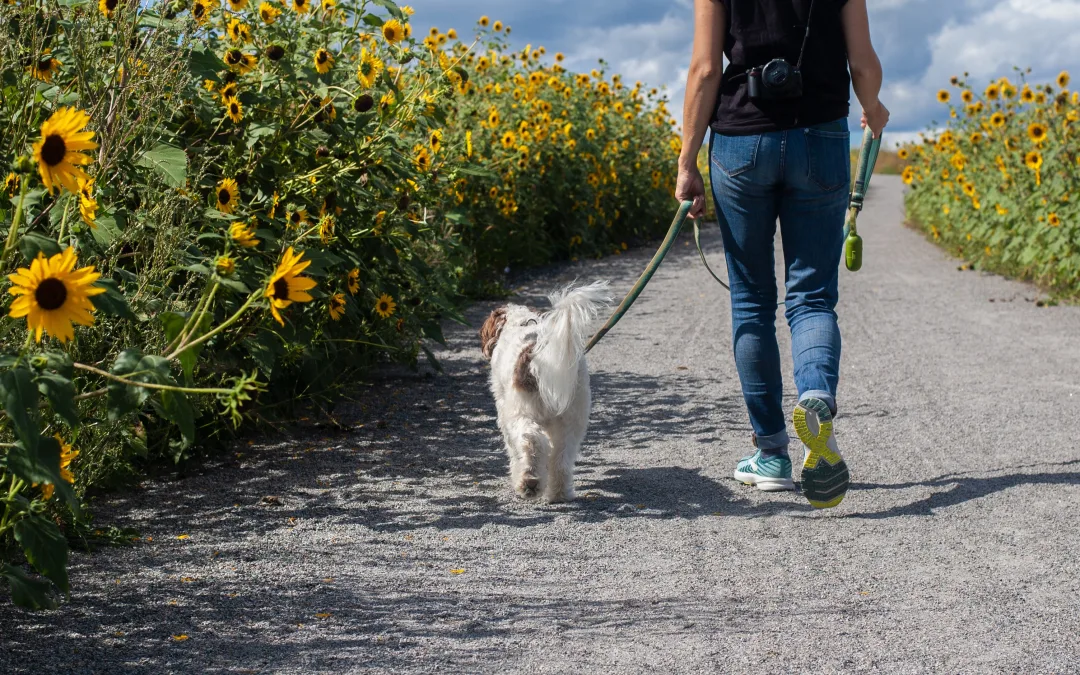
Taking your dog outside is a great way to combat boredom. The goal isn’t just to take them out for their usual potty breaks, but rather to offer them longer and more varied experiences. To achieve this, don’t hesitate to vary the locations and times of da: it’s a good way to stimulate their curiosity, allow them to use all their senses, especially their sense of smell, and burn off energy.
Ideally, it’s recommended to walk your dog for at least 1 to 1.5 hours a day, even if they’re lucky enough to have an outdoor space. Walks can, of course, be broken up into several sessions (for example, three 20-minute walks).
3 – Plan training sessions, even with an adult dog
It is often mistakenly believed that training sessions are only for young dogs. But an adult dog, even if it already has all the basic training, can absolutely continue to learn.
This is a great way to stimulate your pet’s mental abilities and concentration. You can try teaching them several simple tricks: high-fives (tapping your hand with their paw), playing dead, weaving between your legs, and so on. While these tricks may not be essential for everyday use, they help your pet expend energy, and this energy will also strengthen your bond.
4 – Introduce him to other members of his species
Some dogs are very sociable and love meeting new dogs. If this is the case with yours, don’t hesitate to encourage its social interactions . Could be during walks, at the dog park, during group training sessions, by arranging playdates with friends’ and family’s dogs, etc. It’s a great way to exercise your dog and combat boredom, enriching its social circle, allowing it to observe different behaviors, discover new smells, and communicate.
5 – Try dog sports
Whether you’re athletic or not, there are plenty of activities you can enjoy with your dog . These can be done in a group, with an instructor, or on your own. From simple jogging to agility, and even more unusual activities like paddleboarding, mantrailing, or doga, you’re sure to find something that suits both you and your dog.
6 – Ask a relative or a professional for help
If you need to leave your dog alone for extended periods during the day, you can choose to ask a friend, family member, or neighbor to look after it, or hire a dog sitter . This will break the daily monotony and provide stimulation for your dog, preventing boredom.