My dog doesn’t need walks, he has access to a large garden!” “My dog goes out every day to relieve himself, that’s enough!” These are phrases we often hear from owners who consider walking their dog a chore, especially in bad weather or after a long day at work. Yet, a daily walk is essential for a dog… and for its owner. It’s crucial for both physical and mental health, for behavioral balance, and for strengthening the bond between dog and owner. Still not convinced? Discover the ten benefits of walking your dog regularly.
1 – For the regulation of its natural needs
At first glance, it seems like a logical argument! A walk means peeing and pooping, that’s a fact, but it’s much more than that! Walks allow dogs to relieve themselves regularly and hygienically, which is impossible if they are confined for too long. Holding it in for an extended period can lead to serious health problems, including urinary tract infections and kidney problems.
2 – For optimal physical health
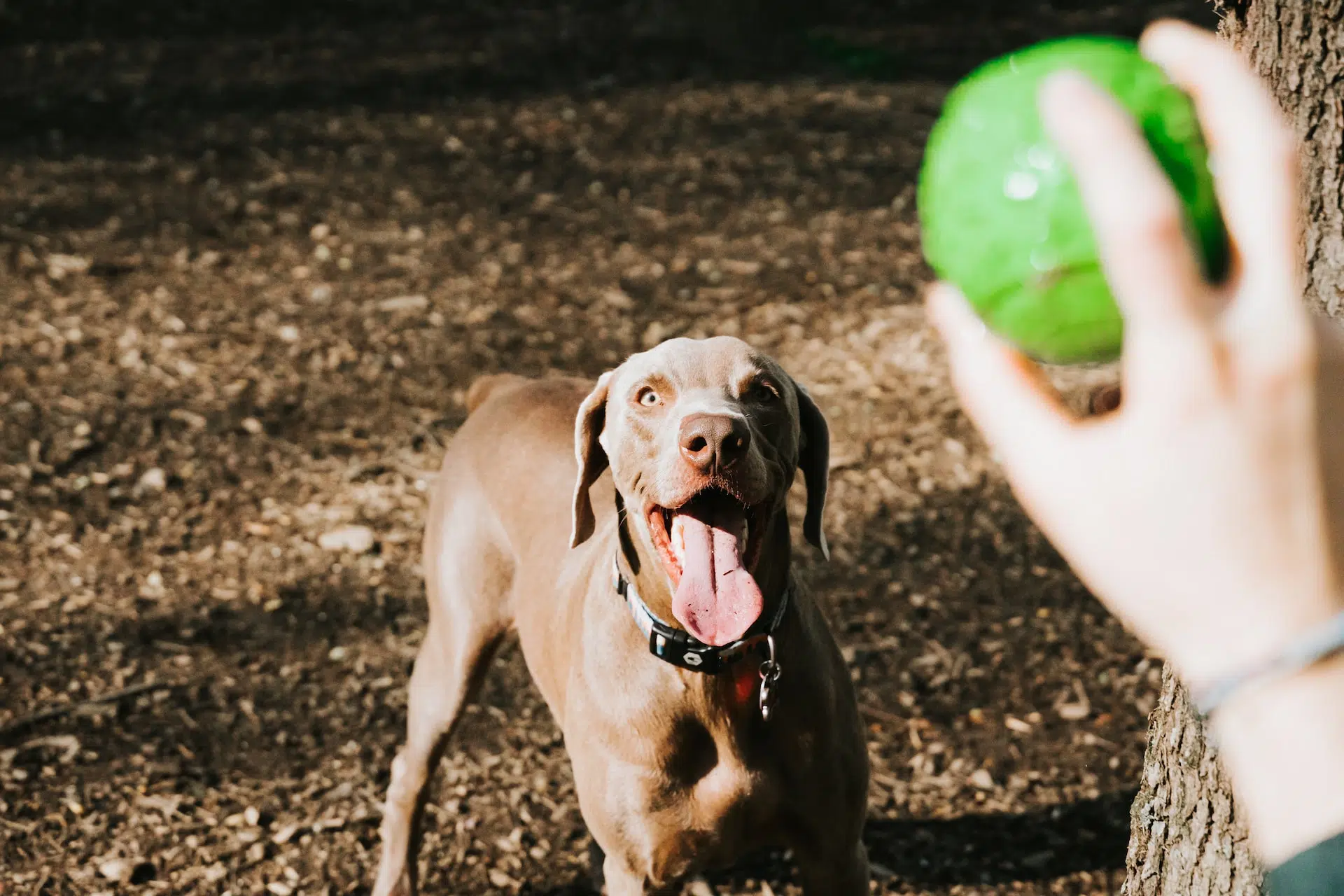
Is your dog a glutton who tends to gain weight easily? Does your dog develop muscle or joint problems without exercise? Daily walks are opportunities for your dog to expend energy, run, jump, or simply stroll more calmly…
It is a physical activity that not only meets a need of the dog, but also has the advantage of maintaining the flexibility of its joints, improving its cardiovascular and digestive health, working its muscles, and fighting against obesity, which is increasingly common in our dogs.
3 – For optimal mental health
Of course, physical exercise is vital, but so is mental well-being! For humans as well as for dogs. For a dog, going for a walk means opening up to a new world, filled with a multitude of sensory experiences, different from one place to another, from one time to another.
During a walk, a dog will use all its senses, especially its sense of smell, to decipher messages left by passersby, other dogs, or perhaps a recent event. This is unlike in a garden, even a large one, where it eventually only smells its own scent!
This walk, experienced by a dog as a sensory exploration, will allow him to fight against a kind of mental apathy, against boredom, or even depression.
4 – Like a ritual of happiness
It’s well known to serious athletes (and weekend warriors alike!) that physical exercise releases endorphins, the famous “feel-good hormones,” in humans. The same is true for dogs! A good walk, filled with discoveries, smells, and encounters, reduces the level of cortisol, the stress hormone.
Therefore, offering your dog walks very regularly, almost like a ritual, will reduce his stress. Because he will know that he will have this moment of emotional and physical well-being.
5 – Towards a reduction of behavioral problems
Often, a bored dog that does not expend enough energy will develop behavioral problems: it destroys furniture, it barks continuously, it is hyperactive, it relieves itself everywhere…
A sufficiently long daily walk (not just a quick morning pee!) allows him to release his excess energy. Logically, being more tired and mentally stimulated, he will be calmer and more relaxed, less anxious and less nervous.
6 – For better socialization
For a dog, walks provide an opportunity for interaction and, nd th, socialization. This is essential, especially for a puppy. During walks, a dog will encounter noises, large moving objects, people other than its owner who walk, run, stop to pet it, and other dogs. By being regularly exposed to these situations, the dog will learn to overcome its fear, potentially its aggression, and to interact with others.
7 – To strengthen the bond with his master
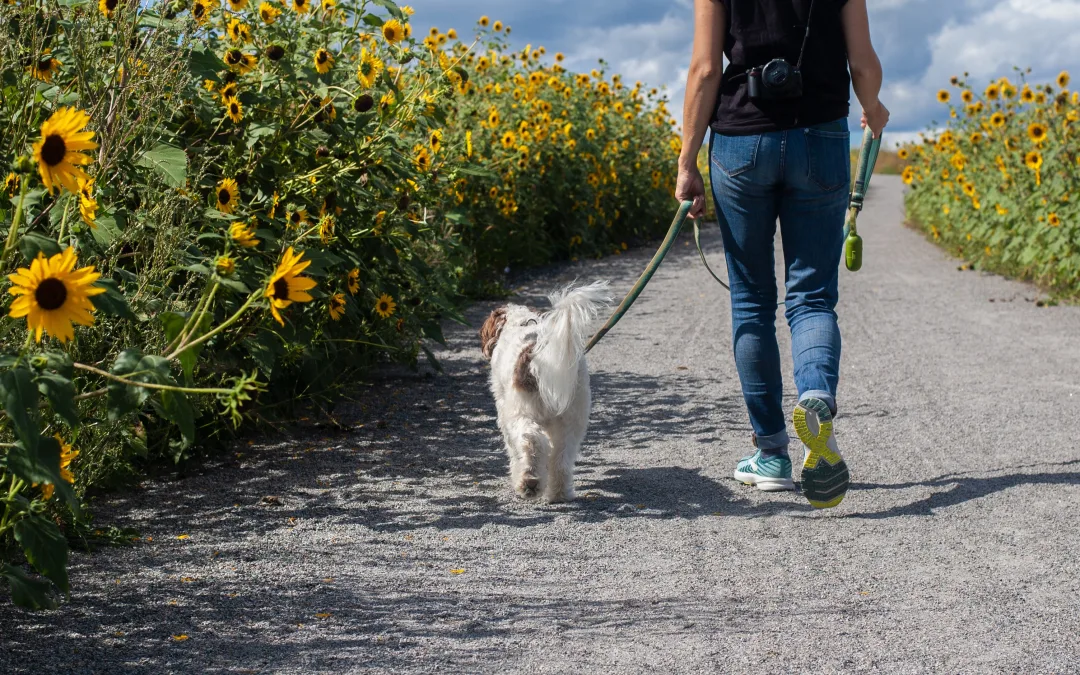
A walk is undeniably a shared experience, a welcome break from the daily grind. Walking side by side, owner and dog strengthen their bond and mutual trust . It’s also a perfect opportunity to practice basic training commands like walking to heel and recall. Another way to reinforce the relationship.
8 – Detecting health problems
Yes indeed, regular walks can be a diagnostic tool . n fact, it’s a prime opportunity to observe your dog and detect a small anomaly: a slight limp, unusual shortness of breath, lack of energy, a change in stools… All symptoms that might go unnoticed at home.
And the earlier these signs are detected, the better they can be treated.
9 – An educational opportunity
Does your dog pull on its leash every time you go out? Is it aggressive towards other dogs? Or, on the contrary, does it greet everyone enthusiastically? Regular walks are perfect opportunities to work on obedience and correct these behaviors that are unpleasant and bothersome for everyone.
Indeed, the outside world, explored during a walk, presents a multitude of distractions that are all circumstances to work on simple commands like “sit”, “don’t move”, “stay” in a real context.
Conversely, in a garden, where opportunities to encounter a new experience are rare, it is more difficult.
10 – The health benefit for the owner
Have you heard of the 10,000 steps a day? While this 10,000-step-a-day figure is more of an urban legend than a genuine health recommendation based on scientific evidence, there’s no denying that walking is good for your health. It’s a way to stay active without too much pain, and therefore improve your physical condition. Especially if that walk also brings joy to your four-legged friend!
Beyond the health benefits, walking the dog allows you to “think about something else” while getting fresh air, thus managing stress, stimulating creativity, and also meeting people and exchanging ideas. A dog greatly facilitates social interactions and makes it easy to strike up a conversation with other dog owners. So much so that, in some cities, associations organize group walks for dogs and their owners.